
Los suelos de caucho y los suelos de PVC se comparan con mayor frecuencia en el contexto de los gimnasios, ya que son las opciones de suelo más comunes para los centros de fitness. Cada tipo tiene sus propias ventajas y desventajas. Para tomar la decisión correcta, es necesario ' Es fundamental comprender primero las diferencias clave entre los suelos de caucho y los suelos de PVC para gimnasios.
El suelo de caucho para gimnasios está fabricado con materiales poliméricos que incluyen caucho natural, caucho sintético y otros aditivos. Sus características principales son las siguientes:
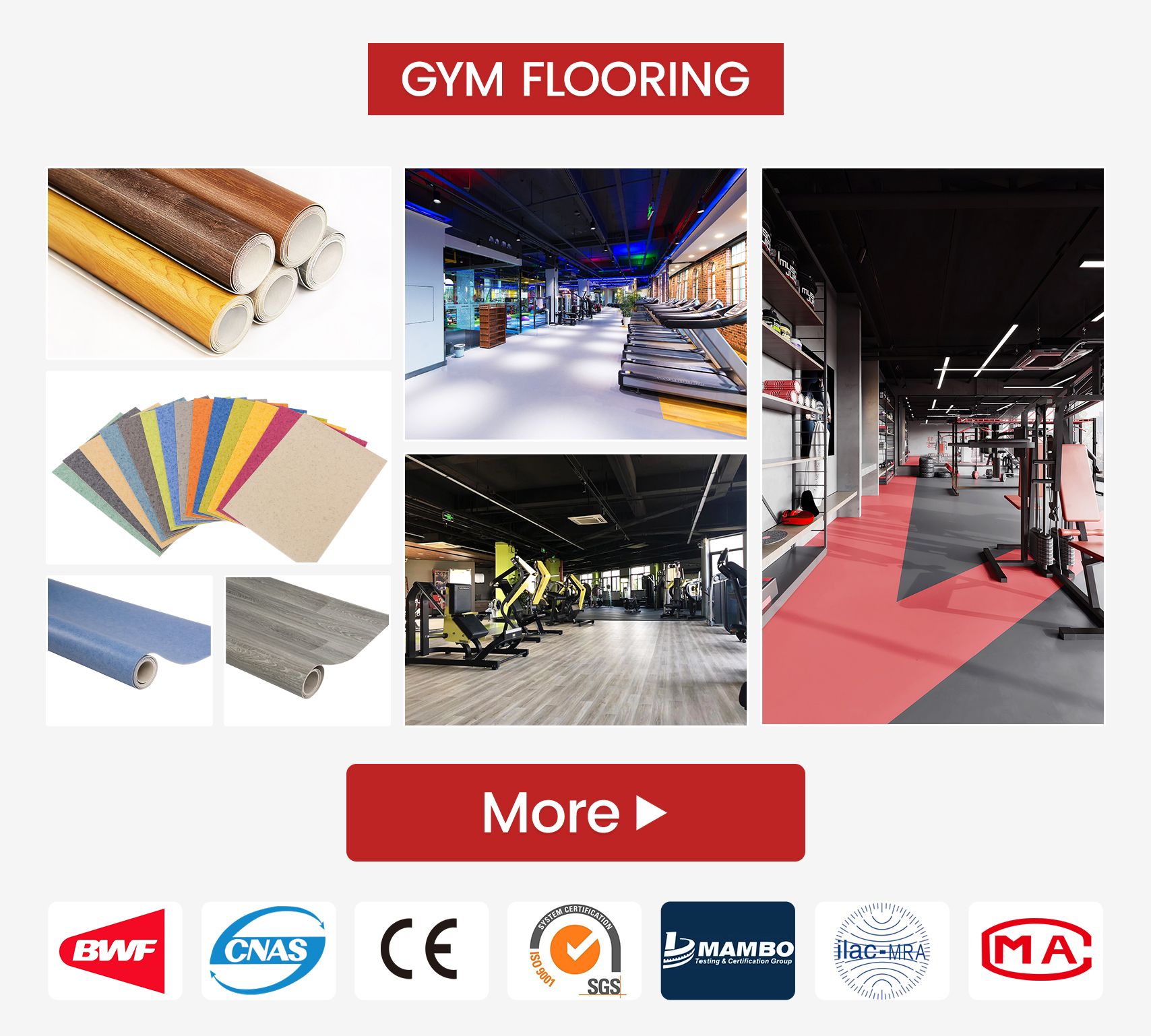
Los suelos de PVC para gimnasios están fabricados principalmente de cloruro de polivinilo. Actualmente, se dividen en dos categorías principales: suelos de PVC homogéneos, donde el patrón y el material son uniformes desde la superficie hasta la base; y suelos de PVC compuestos, que presentan una capa superior de PVC transparente puro, seguida de una capa impresa, una capa de fibra de vidrio, una capa base y otras capas estructurales. Sus características principales son:
Sin duda, existe una amplia variedad de materiales para suelos de gimnasios. Los propietarios pueden configurar diferentes materiales para distintas áreas según las necesidades funcionales: por ejemplo, suelo de madera para salas de ejercicios grupales, suelo de goma para zonas de pesas libres para evitar daños por mancuernas y otros equipos de fitness, y suelo de PVC para zonas con equipos combinados y áreas de cardio. Las preferencias personales también pueden tenerse en cuenta al hacer la selección.

Agregar : No.5 Huaqing Intelligent Park, Huishan District, Wuxi, Jiangsu, China
Continúe leyendo, manténgase informado, suscríbase y le invitamos a que nos cuente lo que piensa.


Derechos de autor © 2026 WUXI TEFA DECORATION MATERIAL CO., LTD. Reservados todos los derechos.
Mapa del sitio | Blog | Xml | Privacy Policy
 Red compatible
 español
 English
 français
 português
 العربية